
Common patient clues
Document sweats, chills, fever waves, air hunger, chest pressure, profound fatigue, dark urine, headaches, dizziness, anxiety surges, and symptoms that flare in cycles.
Tick-borne parasitic infection
Red blood cell parasite causing cyclical fevers, sweats, chills, air hunger, and anemia. Found in 65–80% of chronic Lyme patients. Species awareness and anti-parasitic treatment sequencing are essential.
Babesia species infect red blood cells and can spread by tick bite, transfusion, and rarely from mother to baby. Illness can be mild, relapsing, or severe, especially without a spleen, with immune suppression, in pregnancy, in older adults, or when co-infections and mold/CIRS are present. Horowitz's Babesia series emphasizes B. microti, B. duncani, B. divergens-like strains, and emerging B. odocoilei in resistant presentations. Henry Lindner, MD's 2022 Pennsylvania Senate presentation adds a sequestering-Babesia framework for B. odocoilei: deer/tick ecology, capillary "nest" behavior, and the possibility that venous smears can miss organisms when the clinical pattern remains highly suggestive.
Document sweats, chills, fever waves, air hunger, chest pressure, profound fatigue, dark urine, headaches, dizziness, anxiety surges, and symptoms that flare in cycles.
Blood smear, PCR, antibody testing, FISH, CBC, liver enzymes, bilirubin, LDH, haptoglobin, reticulocytes, kidney markers, and platelet trends help clinicians assess severity and timing.
Seek urgent medical care for severe shortness of breath, fainting, confusion, chest pain, jaundice, dark urine with weakness, high fever, pregnancy, immune suppression, or no spleen.
Dr. Richard Horowitz has been treating and publishing on Babesia since the late 1990s. His 3-part October 2024 Medical Detective Substack series documents a 25-year evolution from Clindamycin/Quinine through Mepron/Zithromax, mefloquine, Coartem, dapsone, and ultimately tafenoquine-based combination therapy. Babesia persists in 65–80%+ of his chronic Lyme/PTLDS patients. Anti-parasitic medications require specialist monitoring for QT interval, hemolysis, methemoglobin, and psychiatric safety.
Horowitz 2024 — latest published protocol
Published in Horowitz's October 30, 2024 Medical Detective Substack (Babesia Part 3 of 3). This is the most recent advancement for patients who have failed standard Mepron/Zithromax, Clindamycin/Quinine, Coartem, or dapsone-based protocols. Tafenoquine is an FDA-approved anti-malarial used off-label for resistant Babesiosis. B. microti and B. duncani have demonstrated genetic resistance to standard therapies, and B. duncani has an unusually high tolerance to recommended treatments.
| Phase | Medication | Dose & Schedule |
|---|---|---|
| Loading dose (first 3 days) |
Tafenoquine (Arakoda, Rx) | 100 mg tablets: 2 tablets once daily = 200 mg/day for 3 consecutive days = 600 mg total loading dose |
| Atovaquone (Mepron, Rx) | 750 mg (5 mL) twice daily. For B. microti, Horowitz uses 1500 mg twice daily as lower doses do not clear B. microti as well | |
| Maintenance (6 weeks) |
Tafenoquine (weekly) | 200 mg once weekly (2 x 100 mg tablets). For improved B. microti clearance, Horowitz often uses 300 mg once weekly (3 tablets). Continue for 6 weeks total |
| Atovaquone (daily) | 750–1500 mg twice daily. Continue for 6 weeks alongside weekly tafenoquine | |
| Adjunctive agents (added for resistance) |
Azithromycin (Zithromax, Rx) | 250–500 mg twice daily. Macrolide with anti-Babesia activity, used alongside tafenoquine + atovaquone |
| Ivermectin (Rx) | 0.2 mg/kg once daily. Anti-parasitic; Horowitz adds this for complex/resistant cases |
| Supplement | Dose | Purpose |
|---|---|---|
| Glutathione (liposomal) | At least 1000 mg twice daily | Primary antioxidant to reverse methemoglobin |
| Vitamin C | 1 gram twice daily | Antioxidant methemoglobin support |
| Vitamin E | 300 IU twice daily | Red blood cell membrane protection |
| Cimetidine (Rx) | 400 mg twice daily | CYP450 inhibitor; helps manage methemoglobin and Herxheimer reactions |
| Methylene blue | At least 100 mg twice daily | Direct methemoglobin reversal agent; also has anti-malarial and anti-Babesia activity |
Critical safety warning — from Horowitz's Substack: Tafenoquine and dapsone should NOT generally be given at the same time due to additive methemoglobin risk. G6PD must be normal before starting. Tafenoquine carries psychiatric risk (suicidality, psychosis) similar to its cousin mefloquine, and can cause hemolytic anemia and elevated methemoglobin. Contraindicated in pregnancy. Full side effect profile in the PDR should be consulted. Methemoglobin levels must be monitored during treatment.
* Tafenoquine for Babesia is off-label. Tafenoquine (Arakoda) is FDA-approved for malaria prophylaxis only. Its use in Babesiosis is clinician-directed, off-label, and requires G6PD testing, methemoglobin monitoring, psychiatric screening, and pregnancy review. Do not self-prescribe. *
Standard and historical regimens
Horowitz's Babesia treatment evolution spans 25+ years, from the harsh Clindamycin/Quinine of the 1990s through today's tafenoquine-based therapy.
| Regimen | Medications & Dose | Duration | Notes |
|---|---|---|---|
| CDC standard (first-line) | Atovaquone 750 mg bid + Azithromycin 500–1000 mg/day | 7–10 days (longer for immunocompromised) | Horowitz published this regimen 2 years before the NEJM 2000 paper. Better tolerated than Clindamycin/Quinine |
| CDC alternative | Clindamycin 600 mg tid IV or PO + Quinine 650 mg tid | 7–10 days | Effective but poorly tolerated (nausea, vomiting, tinnitus, rash, QT prolongation). Requires baseline + repeat EKG |
| Horowitz pregnancy protocol (2019) | Clindamycin 600 mg tid + Mepron (atovaquone) 1500 mg bid + Zithromax 250 mg bid | 10–14 days | Safe in third trimester. Published in Archives of Medical Case Reports 2019. Resulted in healthy babies in FISH-positive mothers |
| Mefloquine + Artemesia (2000) | Mefloquine (Lariam) ½ tablet twice weekly + Artemisinin (Chinese herb) 3x/day + Doxycycline 100 mg bid | Variable | 21.5% symptom improvement. Psychiatric monitoring required. 22% still PCR-positive post-treatment. Rarely used now |
| High-dose Bactrim (1995/2019) | Trimethoprim-Sulfamethoxazole DS 1–2 tablets 4x/day (QID) added to standard protocols | Variable | 89% success rate for B. microti. Nausea/vomiting limited tolerability. Required anti-nausea drugs + QT monitoring |
| Coartem pulse (lumefantrine/artemether) | 4 tablets twice daily, 3 days on / 11 days off, every 2 weeks | Repeated cycles | Knocks down Babesia symptoms but not necessarily curative. QT monitoring required. Sometimes combined with Malarone |
| Malarone (atovaquone/proguanil) | 4 tablets (1000 mg atovaquone / 400 mg proguanil) daily | Months | Pill form of atovaquone. Cannot be mixed with CoQ10 (interferes with efficacy). Helpful but not curative alone |
| Alinia (nitazoxanide) | Standard dosing for 3–5 days | 3–5 days | Used when GI parasites (Giardia, Cryptosporidium) overlap. Partial effect on Babesia by lowering parasite load |
| Dapsone Combination Therapy (2016) | Dapsone 100 mg bid + Doxycycline 100 mg bid + Rifampin 300 mg bid | 8+ weeks | Sulfa persister drug. Moderate/severe Babesia symptoms improved most. Not curative alone for Babesia |
| Disulfiram (Antabuse) | Clinician-directed dosing | Variable | Sulfa persister drug. Some anti-Babesia activity noted. Published in medical literature for chronic Lyme |
Johns Hopkins / Horowitz herbal protocol
Johns Hopkins researchers (Dr. Sunja Schweig and colleagues) published studies on botanical medicines effective against Babesia duncani. Horowitz uses these 5 herbs regularly in combination with pharmaceutical protocols. They can be used between pharmaceutical pulses, layered with tafenoquine/atovaquone, or as standalone therapy for patients who cannot tolerate prescription anti-parasitics.
| Herb | Form & Dose | Source / Notes |
|---|---|---|
| Cryptolepis sanguinolenta | 30 drops 3 times daily (Cryptoplus, Researched Nutritionals) | Broad-spectrum antimicrobial; active against Babesia, Bartonella, and Borrelia persisters. One of the most potent herbal anti-protozoal agents |
| Artemisia annua (Sweet Wormwood) | 1 capsule/tablet 3 times daily (Dr. Zhang, Traditional Chinese Medicine) | Artemisinin is the active compound; well-established anti-malarial herb. Used in Chinese medicine for centuries against parasites |
| Scutellaria baicalensis (Chinese Skullcap) | Liquid tincture, 3 times daily | Potent synergist; enhances efficacy of other herbs. Antiviral, antibacterial, anti-inflammatory. Available from Green Dragon Botanicals or Woodland Essence |
| Polygonum cuspidatum (Japanese Knotweed) | Liquid tincture, 3 times daily | Broad-spectrum antimicrobial; source of resveratrol; anti-inflammatory; disrupts biofilms. Available from Green Dragon Botanicals or Woodland Essence |
| Alchornea cordifolia | Liquid tincture, 3 times daily | African herb with anti-Babesia activity confirmed by Johns Hopkins research. Available from Green Dragon Botanicals or Woodland Essence |
Other adjunctive agents (Horowitz Substack):
| Component | Dose | Babesia-specific rationale |
|---|---|---|
| Iodine/Iodide | 12.5–50 mg/day | Antiparasitic; concentrates in red blood cells and glandular tissue. Iodine has direct anti-protozoal properties and supports immune-mediated clearance of blood-borne parasites. |
| Vitamin C | 3,000–6,000 mg/day | Antioxidant protection against hemolysis and oxidative stress from RBC destruction. Reduces inflammatory cytokine load. |
| Selenium | 200–400 mcg/day | Glutathione peroxidase cofactor protects RBC membranes from oxidative damage during hemolytic infection. |
| Unrefined salt | 1–1.5 tsp/day | Chloride competitively displaces bromide, a toxic halide that competes with iodine at cellular receptors and impairs immune function. |
| Magnesium | 400–800 mg/day | Required for ATP and mitochondrial function. Babesia impairs oxygen delivery; magnesium supports cellular energy metabolism. |
Stephen Harrod Buhner's Babesia protocol from Healing Lyme Disease Coinfections. These herbs target the red-blood-cell parasitic lifecycle.
| Herb | Category | Key actions against Babesia |
|---|---|---|
| Cryptolepis sanguinolenta | Primary antimicrobial | Buhner's #1 anti-Babesia herb. Broad-spectrum activity against Babesia species. Also active against Borrelia and Bartonella persisters. One of the most potent herbal anti-protozoal agents available. |
| Artemisinin (Artemisia annua) | Anti-parasitic | Well-established anti-malarial compound with direct anti-Babesia activity. Typically pulsed (3 weeks on/1 off) to minimize neurotoxicity risk. Best absorbed with fatty meal. |
| Sida acuta | Antimicrobial | Active against Babesia species. Often combined with Cryptolepis for synergistic effect. Also anti-Bartonella. |
| Bidens pilosa (Spanish Needle) | Antimicrobial / anti-inflammatory | Anti-Babesia activity. Reduces systemic inflammation from hemolysis. Traditional use in Africa for malaria-like illnesses. |
| Brucea javanica | Anti-parasitic | Strong anti-Babesia herb. Active against multiple Babesia species. Used in Traditional Chinese Medicine for parasitic infections. |
| Alchornea cordifolia | Antimicrobial / anti-inflammatory | Active against Babesia and Bartonella. Protects spleen and liver during hemolytic infection. Used alongside Cryptolepis for resistant cases. |
| Moringa oleifera | Nutritional / supportive | Nutrient-dense herb to support RBC production during hemolytic anemia. Iron, vitamin A, and antioxidant support for blood-cell recovery. |
Safety infrastructure
| Test | Required for | Rationale |
|---|---|---|
| G6PD level | Tafenoquine, Dapsone | Must be normal; G6PD deficiency = hemolytic anemia risk with both drugs |
| CBC with differential | All protocols | Baseline hemoglobin, platelets, WBC. Monitor for hemolytic anemia, thrombocytopenia |
| CMP | All protocols | Baseline liver enzymes (AST/ALT), bilirubin, kidney function (BUN/Creatinine) |
| Methemoglobin | Tafenoquine, Dapsone, Methylene blue | Baseline and during-treatment monitoring. Tafenoquine elevates methemoglobin similar to dapsone |
| ECG (QT interval) | Clindamycin/Quinine, Coartem, Mefloquine, Macrolides (Azithromycin), Zofran | QT-prolonging drugs can cause fatal arrhythmias. Baseline EKG required; repeat during treatment when combining multiple QT-prolonging agents |
| Pregnancy test | All protocols | Most anti-Babesia drugs are contraindicated. Exception: Clindamycin + Mepron + Zithromax in 3rd trimester (Horowitz 2019 protocol) |
| Psychiatric screening | Tafenoquine, Mefloquine, Dapsone | Tafenoquine carries suicidality/psychosis risk (similar to mefloquine). Dapsone has psychiatric/neuropsychiatric considerations |
| Drug interaction review | All protocols | Quinine, macrolides, quinolones, SSRIs, proton pump inhibitors, and anti-nausea drugs all affect QT interval. Full PDR review required |
Key contraindications and interactions (Horowitz Substack):
* All Babesia treatment requires specialist supervision. Anti-parasitic medications have complex drug interactions, QT effects, hemolysis risk, and psychiatric safety considerations. Each patient's regimen must be individualized by a clinician familiar with tick-borne disease treatment. *
Babesiosis can be silent, mild, relapsing, or life-threatening. A good history captures fever cycles, oxygen-like symptoms, anemia clues, risk factors, and geography.
| Species or strain | Why it matters | Testing and care focus |
|---|---|---|
| Babesia microti | Most commonly identified U.S. human Babesia species, especially in the Northeast and upper Midwest. It can relapse or persist in immunocompromised patients and can be transfusion-associated. | CDC-listed treatment categories, smear/PCR/serology, hemolysis labs, immune-status review, and resistant-case discussion when symptoms or testing persist. |
| Babesia duncani / WA-1 | Reported on the West Coast and discussed by Horowitz as a more treatment-tolerant or resistant Babesia species. Standard B. microti-only serology can miss it. | Species-aware testing, FISH/PCR/antibody strategy, air-hunger and sweat tracking, and specialist treatment planning when relapse patterns continue. |
| Babesia odocoilei | White-tailed-deer-associated Babesia discussed by Horowitz, Lindner, and other specialty clinicians in highly resistant chronic presentations. Lindner cites deer-tick ecology, Ontario tick findings, and veterinary literature suggesting possible capillary/venule sequestration in "nests," which may help explain negative venous smears in some suspected cases. LADA flags it as a high-resistance concern while noting that mainstream literature continues to debate human pathogenicity and testing interpretation. | Document deer-tick exposure, geography, cyclic air hunger/sweats, hemolysis clues, and any B. duncani antibody pattern in eastern or Canadian settings. Discuss specialty FISH/broad Babesia testing, capillary smear consideration, and clinician-supervised resistant-case strategies such as tafenoquine-based combinations only when the full risk profile supports it. |
| Babesia divergens | A European species that can be severe, especially in patients without a spleen. CDC notes B. divergens infections tend to be more severe than typical B. microti. | Urgent evaluation for severe hemolysis, travel/residence history, smear/PCR support, hospital-level care when parasitemia or organ involvement is serious. |
| MO-1 | A B. divergens-like strain reported in Missouri. It belongs in the rare Babesia differential when severe illness, geography, and lab findings fit. | Public health or specialty molecular testing, smear review, hemolysis labs, and urgent care planning in high-risk patients. |
| KO-1 | A rare B. divergens-like organism reported in Asia. It is mainly relevant for travel, immigration, military, field-work, or animal-exposure histories. | Travel-aware testing, infectious-disease consultation, public health lab support, and malaria/Babesia distinction on smear and molecular testing. |
| Babesia venatorum / EU-1 | Reported in Europe and Asia, with higher concern in immunocompromised patients. It may not be covered by routine U.S. panels. | Travel and immune-status history, species-aware PCR or reference-lab testing, and close monitoring for anemia or organ stress. |
| Babesia bovis | Primarily a cattle Babesia, but it appears in Horowitz's global species list and belongs in a livestock/travel-aware differential when exposure is unusual. | Veterinary or zoonotic exposure history, public health or reference-lab input, and avoidance of assumptions based on a standard B. microti panel alone. |
| Babesia bigemina | Another major cattle Babesia in global veterinary medicine. Human relevance is uncommon, but it matters when livestock, travel, and severe hemolysis clues line up. | Travel/livestock exposure documentation, smear morphology support, and molecular confirmation through specialized channels. |
| Babesia major | A ruminant-associated Babesia noted in broad species discussions. It is rare in human care but should not be ignored when exposure history is unusual. | Specialist differential diagnosis, reference-lab consultation, and parallel evaluation for more common causes of fever and hemolysis. |
| Babesia crassa | A sheep/goat-associated Babesia in global piroplasm discussions. Human testing is not routine, so geography and animal exposure carry extra weight. | Travel and livestock history, public health guidance, and clinician review of whether testing is clinically meaningful. |
| Babesia occultans | A cattle-associated Babesia included in Horowitz's list of species to keep in mind. It is mainly a rare/global exposure consideration. | Specialty consultation when severe Babesia-like illness follows relevant travel or animal exposure and common panels are unrevealing. |
| Lindner focus | What the presentation adds | How patients can use it with a clinician |
|---|---|---|
| Deer-tick ecology | Lindner highlights B. odocoilei as a white-tailed-deer Babesia and cites tick studies from Pennsylvania and southern Ontario, including reports of B. odocoilei in Ixodes scapularis ticks. | Bring a location and exposure timeline: tick bites, deer-heavy property, hunting/field work, pets, travel, and whether standard B. microti testing matched the symptom pattern. |
| Possible antibody cross-reaction | The presentation raises the possibility that some B. duncani antibody results in eastern North America may reflect cross-reactivity with B. odocoilei, rather than true West Coast B. duncani. | Do not treat a single antibody result as a complete species answer. Ask whether additional Babesia FISH, immunoblot, PCR, smear timing, or reference-lab input would change care. |
| Capillary/venule sequestration | Using veterinary Babesia literature, Lindner describes infected red blood cells lodging in small vessels and forming capillary or venule "nests," where organisms may be sparse in ordinary venous blood. | If symptoms persist but venous smear/PCR is negative, discuss whether capillary blood smear or specialty FISH is reasonable, especially during fever, sweat, air-hunger, or exertional-crash flares. |
| Testing limitations | Lindner emphasizes that B. odocoilei has no routine antibody test, venous smears may be negative, and IGeneX FISH/immunoblot or TLab FISH can still be false-negative. | Track symptoms and labs over time instead of relying on one negative test. CBC, platelets, bilirubin, LDH, haptoglobin, reticulocytes, liver enzymes, and kidney markers can help show risk and timing. |
| Neuro-exertional pattern | Lindner's presentation connects suspected sequestering Babesia with exertional intolerance and encephalopathy-like symptoms, while also stressing overlap with Bartonella and other tick-borne infections. | Bring objective notes: post-exertional crashes, cognitive changes, dizziness, psychiatric worsening, sleep disruption, and co-infection history. Seek urgent help for confusion, severe shortness of breath, chest pain, suicidality, or fainting. |
| Treatment implications | Lindner argues that sequestered Babesia may require prolonged, multi-agent, specialist-supervised care and discusses fibrin or nest disruption as a specialist concept. This is not a self-treatment protocol. | Use this as a reason to find an experienced clinician, not to self-prescribe. Anti-Babesia drugs and adjuncts can involve G6PD risk, hemolysis, QT effects, methemoglobin, psychiatric warnings, pregnancy issues, and drug interactions. |
| Clinical issue | Why it matters | Clinician evaluation focus |
|---|---|---|
| Species and geography | Different species and Babesia-like organisms may require different test panels, and routine labs may not cover all clinically relevant possibilities. | Species fit by location, travel, tick exposure, immune status, and available test methods. |
| Direct testing | Blood smear, PCR, and FISH can miss low-level, intermittent, or possibly sequestered infection, but positives can be very useful when timing is right. | Repeat testing during fever or sweat flares, combine direct and antibody methods when appropriate, and discuss capillary blood smear or specialty FISH when B. odocoilei or another sequestering species is suspected. |
| Routine labs | CBC, platelets, bilirubin, LDH, haptoglobin, reticulocytes, kidney markers, and liver enzymes can show severity and hemolysis risk. | Evidence of red-cell destruction, liver stress, low platelets, kidney stress, or severe parasitemia. |
| Treatment safety | Anti-parasitic medications can interact with other drugs and may require monitoring for liver, cardiac, blood-count, pregnancy, and tolerance issues. | Baseline labs, interaction checks, pregnancy considerations, and urgent stop rules before treatment. |
| Testing category | Horowitz / Kinderlehrer / Lindner focus | Common tests and labs to discuss |
|---|---|---|
| Acute or severe Babesia workup | Horowitz and conventional guidance both treat high-risk Babesia as a red-blood-cell infection that can become urgent, especially in asplenia, pregnancy, older age, or immune suppression. | Thin blood smear with parasitemia estimate, Babesia PCR, CBC with platelets, CMP, bilirubin, LDH, haptoglobin, reticulocyte count, urinalysis for hemoglobin/dark urine, kidney markers, and hospital-level evaluation when severe. |
| Species-aware testing | Horowitz and Kinderlehrer emphasize that B. microti-only testing can miss clinically important Babesia-like illness. | B. microti IgG/IgM, PCR, and smear; B. duncani/WA-1 IFA or immunoblot when geography or resistant symptoms fit; B. divergens-like and MO-1/KO-1 reference-lab testing when travel, severity, or splenic risk fits. |
| FISH and low-level infection | Horowitz's FISH research supports direct detection when serology is negative or immune response is unreliable, while acknowledging that timing and parasite load matter. | Babesia FISH through specialty labs, PCR during fever/sweat/air-hunger flares, repeat direct testing when early or single samples were negative, and combined antibody plus direct testing when clinically justified. |
| B. odocoilei / sequestering Babesia | Lindner's work adds a capillary-blood and sequestration framework for suspected B. odocoilei; Horowitz flags this species in resistant Babesia discussions. | No routine antibody test is established. Discuss TLab for B. odocoilei-focused Babesia testing, TLab/IGeneX-style FISH, specialty Babesia panels, capillary blood smear or capillary sampling when a clinician is experienced with it, and careful interpretation of B. duncani antibody results in eastern/Canadian settings. |
| Co-infections and immune status | Kinderlehrer and Horowitz both frame Babesia in the larger Lyme-MSIDS picture: Babesia may coexist with Lyme, Bartonella, Anaplasma/Ehrlichia, mold/CIRS, MCAS, and immune suppression. | Lyme/Borrelia testing, Bartonella serology/PCR/FISH/enrichment culture, Anaplasma/Ehrlichia PCR or paired serology, immunoglobulins when immune suppression is suspected, spleen history, medication list, and transfusion/pregnancy history. |
| Tafenoquine / dapsone safety labs | Horowitz's tafenoquine-based and dapsone-adjacent protocols require careful safety screening because these drugs can affect red blood cells, methemoglobin, QT risk, mood, and pregnancy safety. | G6PD before tafenoquine or dapsone, CBC with differential, CMP, bilirubin, methemoglobin, reticulocytes, ECG/QT review, psychiatric screening for tafenoquine/mefloquine risk, pregnancy test when relevant, and full interaction review. |
* Babesia testing is timing- and species-sensitive. Severe symptoms or high-risk status should be handled urgently; specialty testing should be ordered and interpreted by a clinician. *
Microscopy images from CDC DPDx and Wikimedia Commons are paired with selected Henry Lindner, MD presentation slides on B. odocoilei, sequestration, and capillary-nest microscopy.
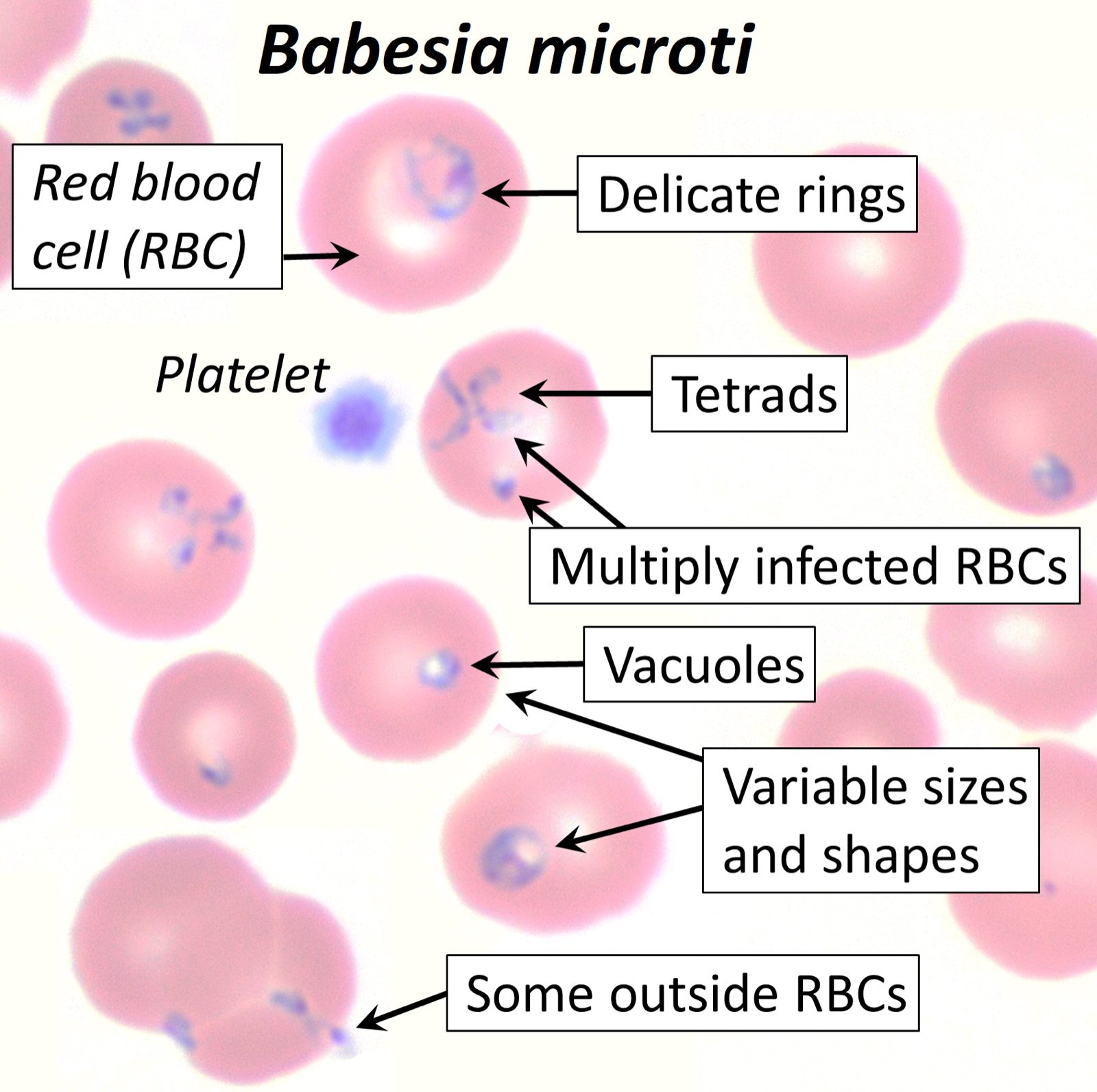
Annotated thin blood smear showing Babesia parasites inside erythrocytes. Ring forms, paired merozoites, and a tetrad (Maltese cross) are visible. The parasites appear as dark-staining bodies within the pale red blood cells. Babesia is a protozoan, more closely related to malaria (Plasmodium) than to bacteria. Source: CDC DPDx / Wikimedia Commons, public domain.
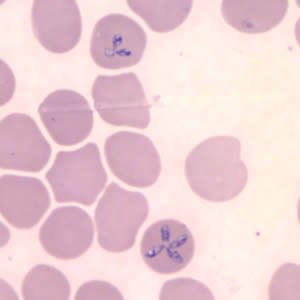
Thin blood smear showing Babesia parasites within red blood cells. Note the characteristic pleomorphic (variable shape) forms. Unlike malaria (Plasmodium), Babesia does not produce hemozoin pigment and can form tetrads (Maltese cross). Source: CDC Public Health Image Library, public domain.
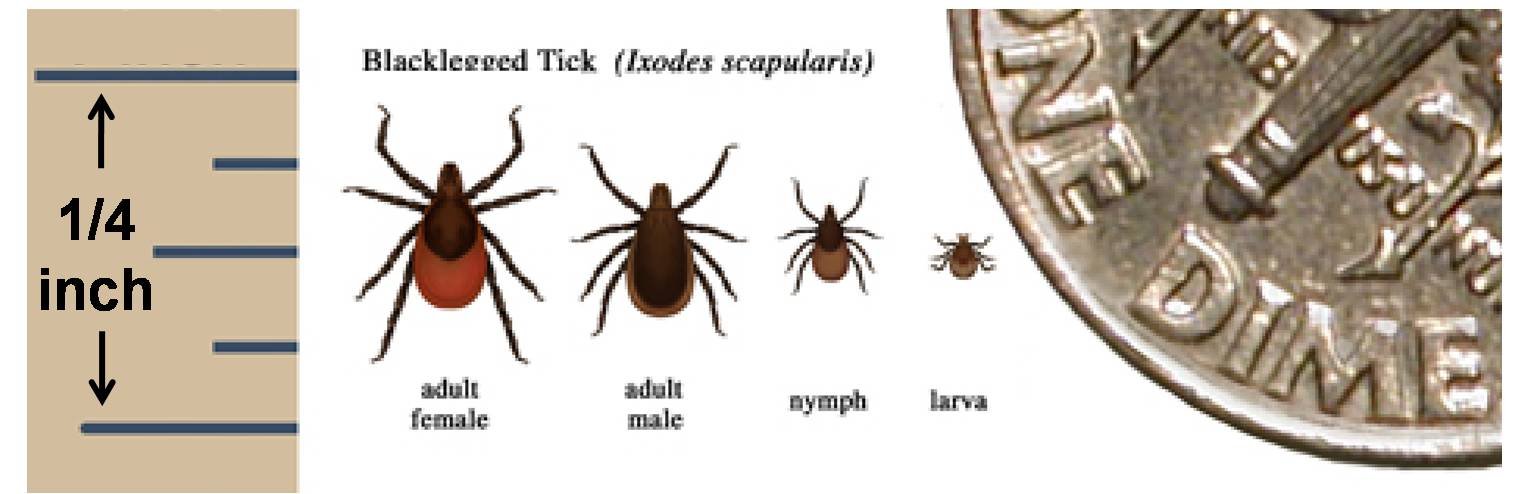
The same blacklegged tick that transmits Lyme disease also transmits Babesia microti. Co-transmission is common: Horowitz finds Babesia in 65–80% of his chronic Lyme patients. Babesia can also be transmitted by blood transfusion, organ transplant, and maternal-fetal transmission.
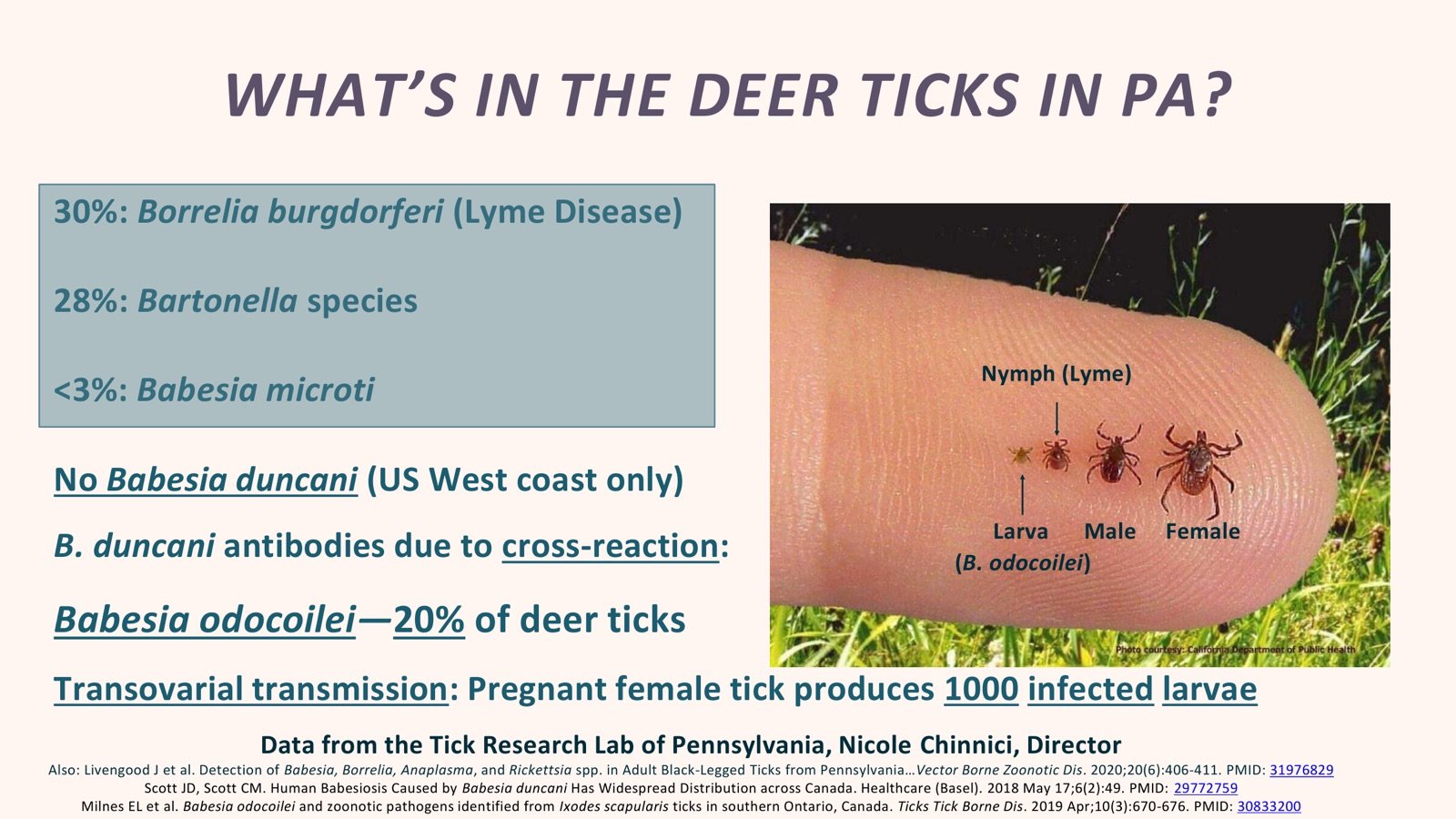
Lindner's 2022 Pennsylvania Senate presentation summarizes deer-tick data and argues that B. odocoilei belongs in the resistant Babesia differential, especially when geography, deer exposure, cyclic symptoms, and species-limited testing do not fit neatly. Source: Henry Lindner, MD, PA Senate HHS Hearing presentation, Sept. 20, 2022.
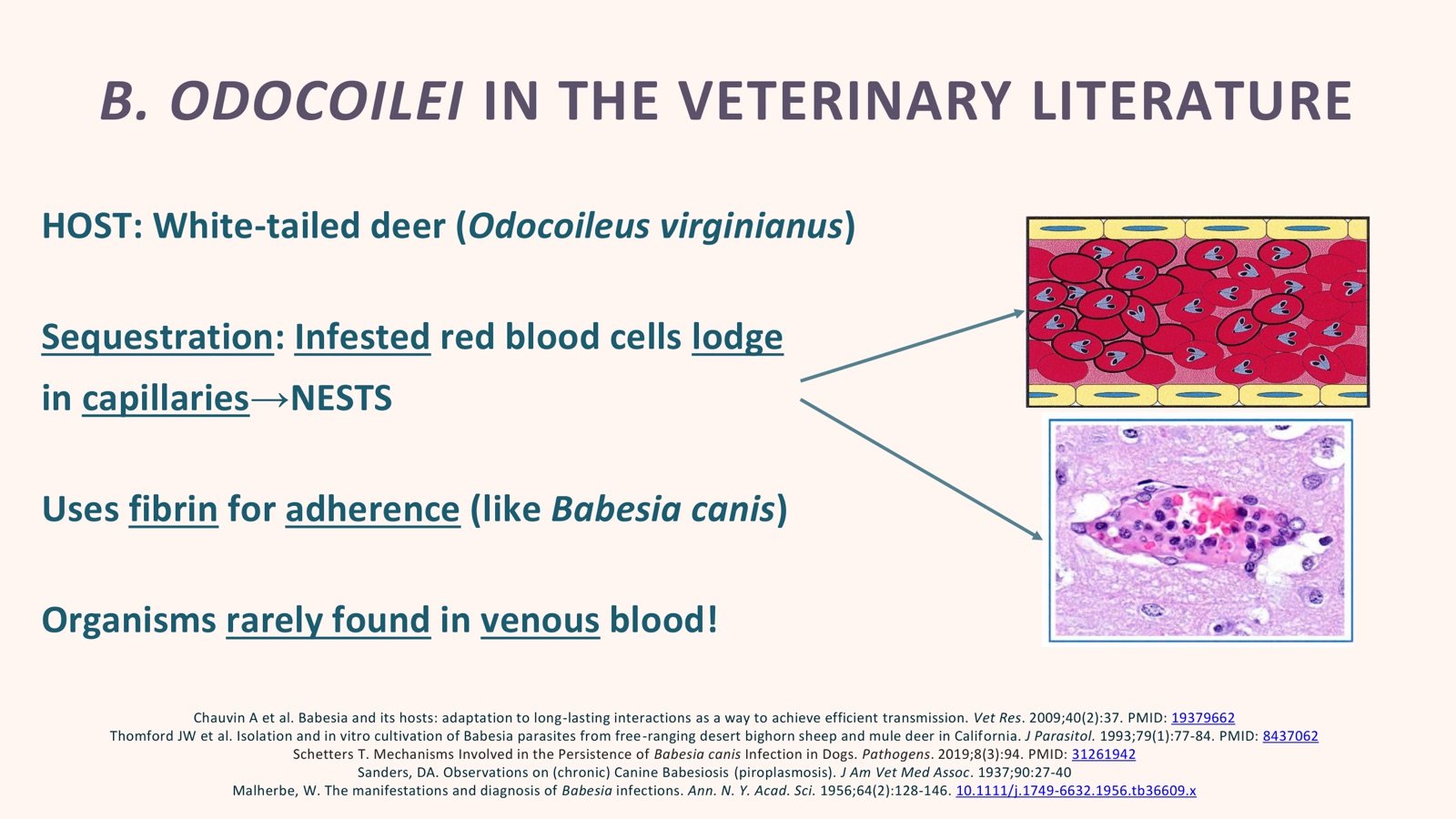
This slide links B. odocoilei to white-tailed deer and veterinary Babesia literature describing infected red blood cells lodging in small vessels. The clinical takeaway is testing caution: a negative venous smear may not settle the question in a highly suggestive case. Source: Henry Lindner, MD, PA Senate HHS Hearing presentation, Sept. 20, 2022.
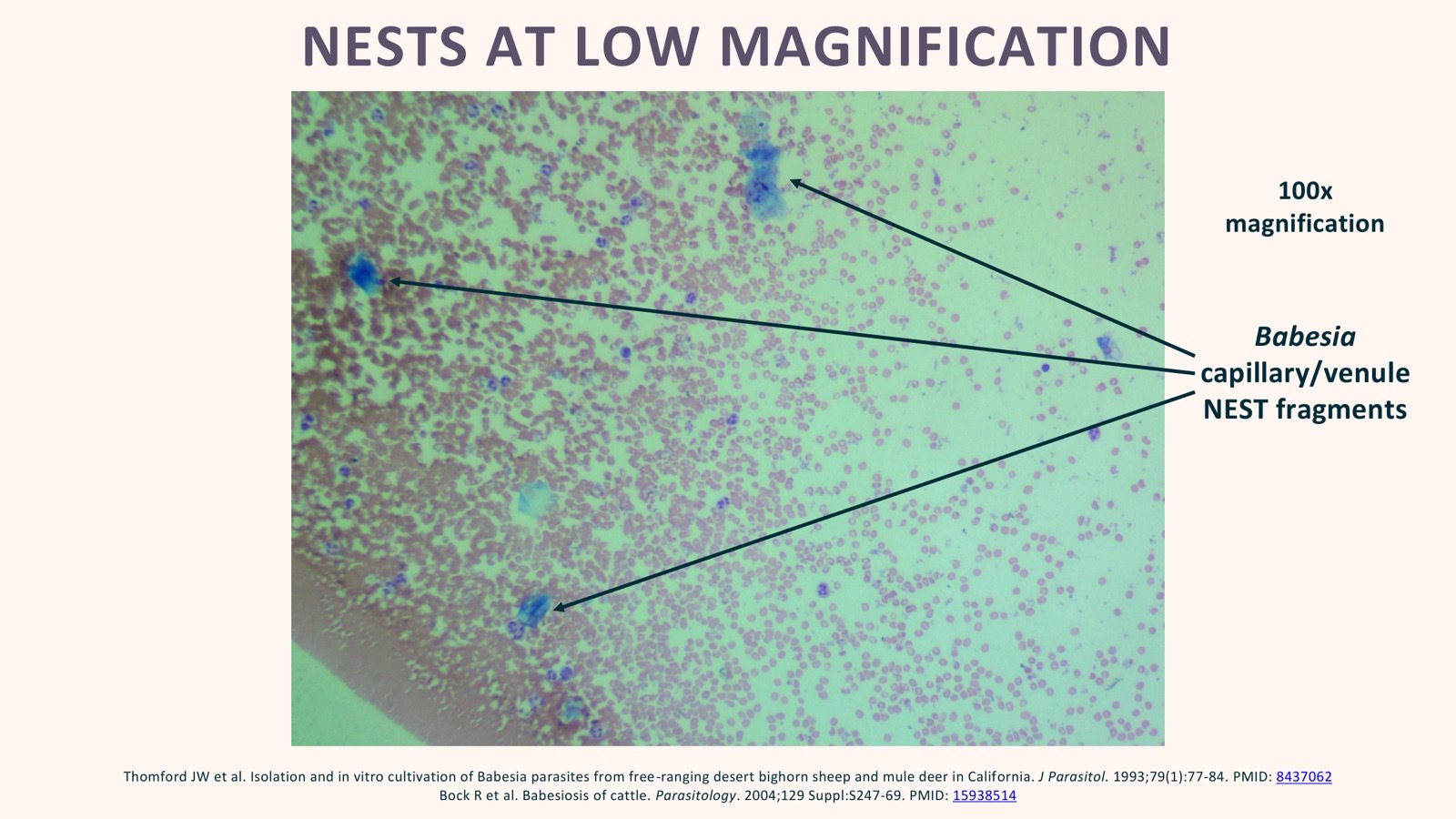
Lindner uses capillary blood microscopy to illustrate suspected Babesia nest material in patients with fatigue and exertional intolerance. LADA presents this as specialist educational material: patients should use it to ask about appropriate testing, not as proof of diagnosis from symptoms alone. Source: Henry Lindner, MD, PA Senate HHS Hearing presentation, Sept. 20, 2022.
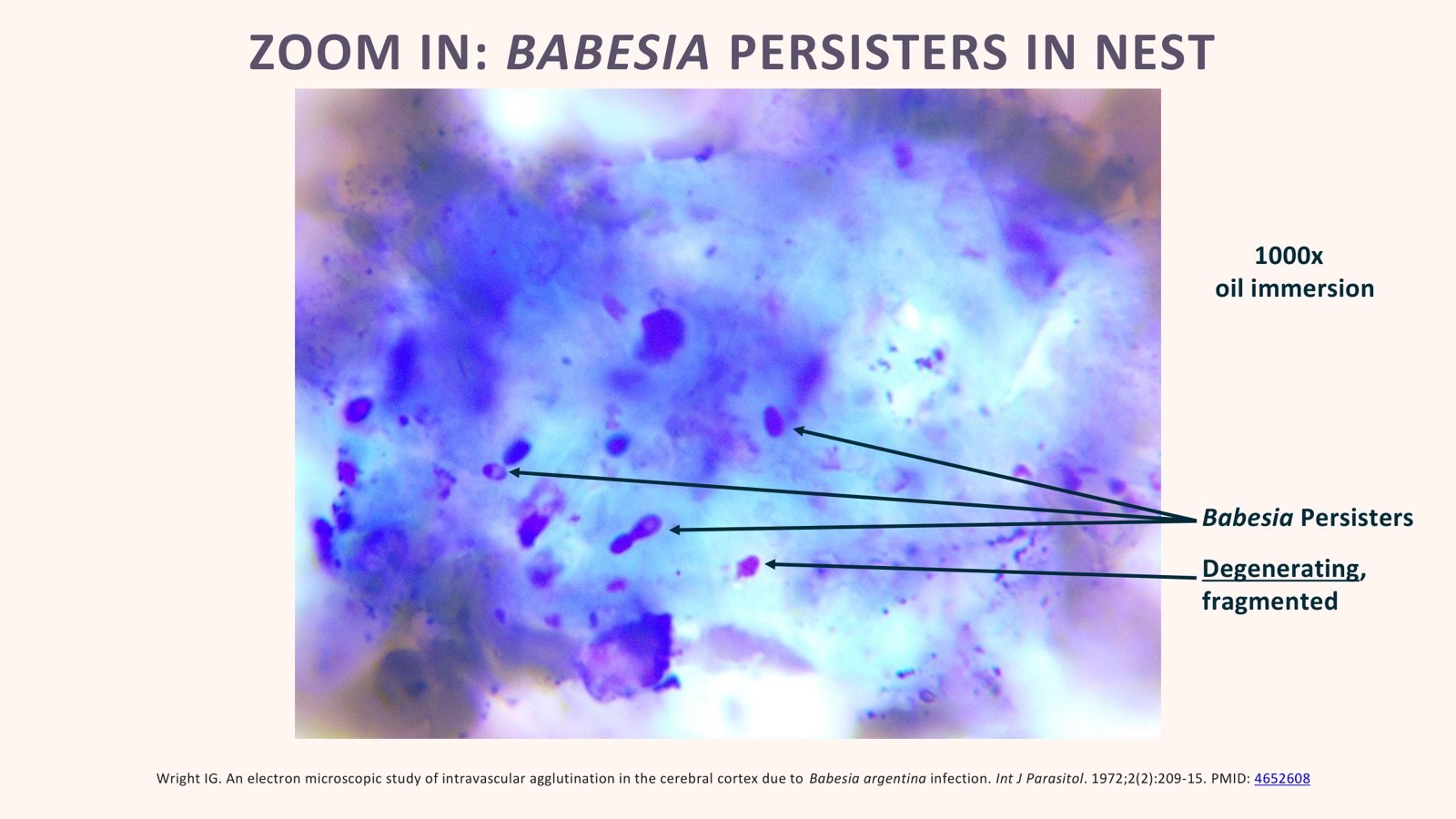
At higher magnification, Lindner's slide labels suspected persister forms and degenerating fragments within nest material. This supports the page's emphasis on specialist interpretation, repeat testing during flares, and careful differential diagnosis with Bartonella, Lyme, mold/CIRS, anemia, cardiopulmonary disease, and other causes. Source: Henry Lindner, MD, PA Senate HHS Hearing presentation, Sept. 20, 2022.
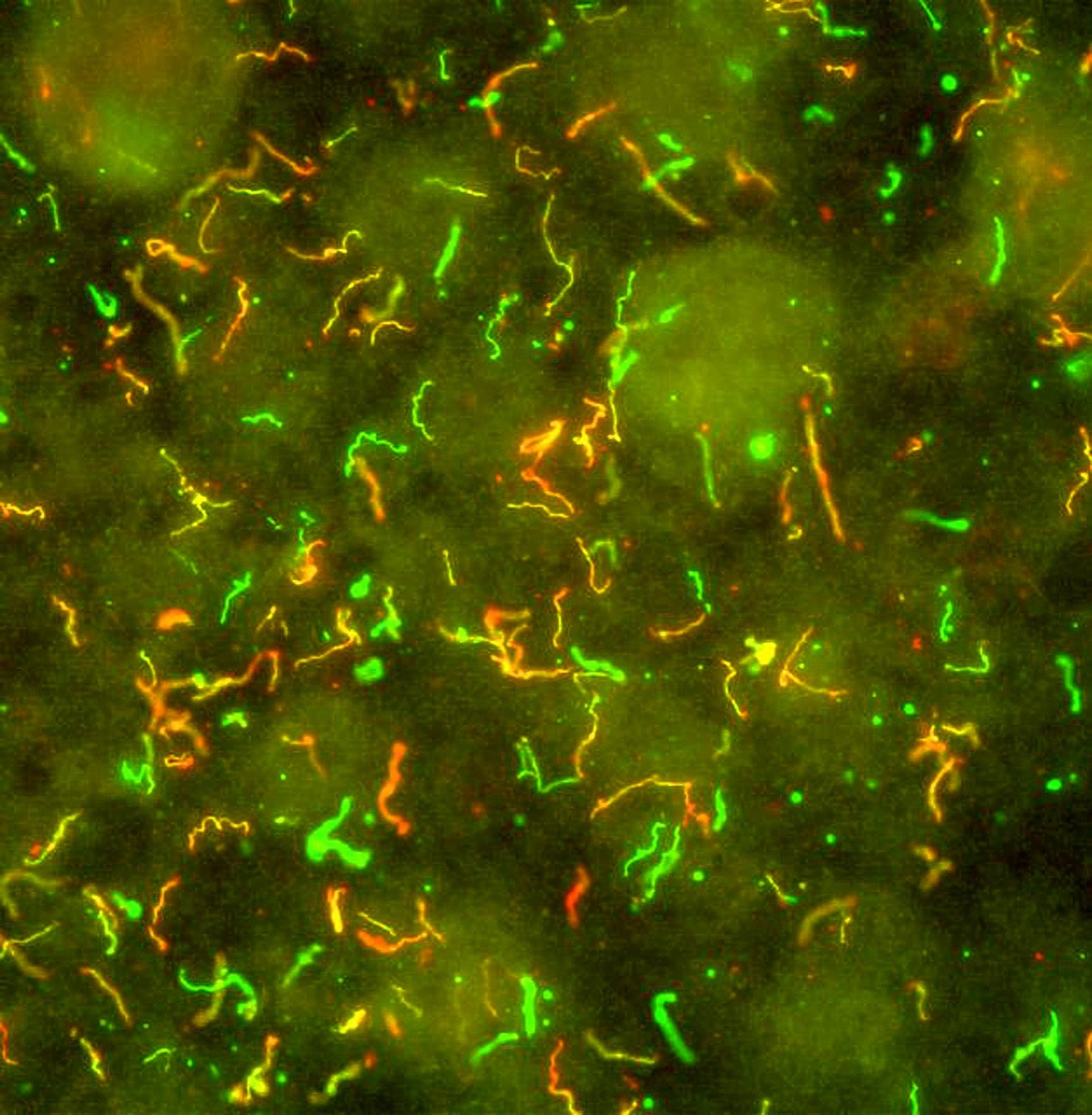
IGeneX FISH test uses a fluorescent RNA probe binding to Babesia ribosomal RNA. Parasites fluoresce bright green, detectable even at low parasitemia. Covers 100+ Babesia species including B. microti, B. duncani, B. divergens, B. bovis, B. bigemina, and emerging species. More sensitive than Giemsa stain for chronic, low-level infection. See Shah, Horowitz et al. (2020) — open access with FISH images.
These sources support clinician conversations about standard treatment, resistant cases, urgent care thresholds, and specialty evaluation.
Seek urgent medical care for severe shortness of breath, confusion, fainting, chest pain, jaundice, dark urine with weakness, high fever, severe dehydration, pregnancy, immune suppression, or no spleen.
LADA's role is to help patients recognize when Babesia belongs in the conversation and to connect them with appropriate medical support.